Each May, the Met Gala captures the attention of the fashion and cultural world. Hosted in New York City, the annual fundraising event supports the Metropolitan Museum of Art’s Costume Institute and marks the opening of its spring exhibition. Organised by Vogue, the gala is widely regarded as one of the most important nights in fashion, bringing together designers, artists, performers, and cultural figures in looks that respond to a carefully chosen theme.
The Costume Institute’s 2026 exhibition theme, “Costume Art,” alongside the gala dress code “Fashion Is Art,” represents one of the most open briefs in recent memory.
As manufacturers of luxury woven textiles, our focus is always on the fabrics themselves, the foundation on which every silhouette is built. Here are some of the fabric trends we spotted at this year’s event.
Classic Tailoring
Alongside more expressive interpretations of the theme, many attendees opted for a refined, classic red carpet approach. Tailored suiting was a key direction across both menswear and womenswear, seen on the like of Jay-Z, Bad Bunny, Felicity Blunt, Stanley Tucci, and Loli Bahia. The classic tuxedo was a timeless statement, with black tie dressing dominating.
These looks placed emphasis on precision, cut, and fabrication, where fabric choice is essential to achieving the sharpness and elegance associated with formal tailoring.
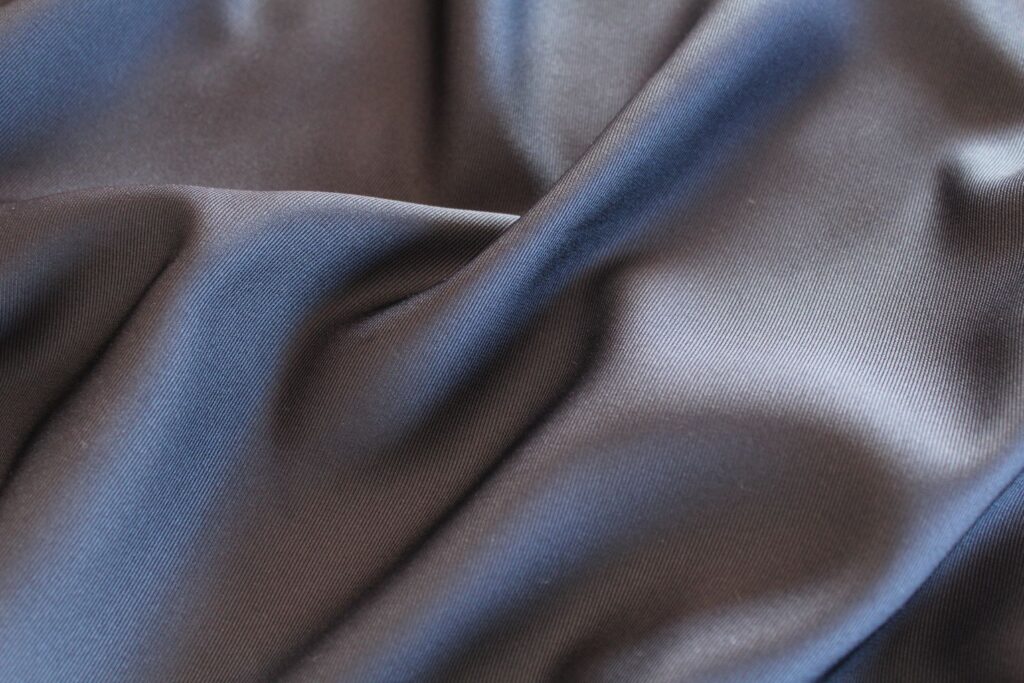
Our stocked range of satins and grosgrain qualities offer readily avaliable high quality tailoring fabrics perfect for suiting and lapel detailing. Alongside this, and as part of our seasonal collection we offer a range of stock-supported jacquard designs, available with lower minimum order quantities from just 5 metres and shorter lead times, ideal for sampling or capsule development.
The collection includes 100% silk and wool-silk blends, allowing designers to sample fabrics before committing to bulk production, or to inform a bespoke development. Whether creating a contemporary tuxedo or reinterpreting classic tailoring, these fabrics provide a reliable foundation for garments that balance tradition with modern execution.
Metallics and Modern Glamour
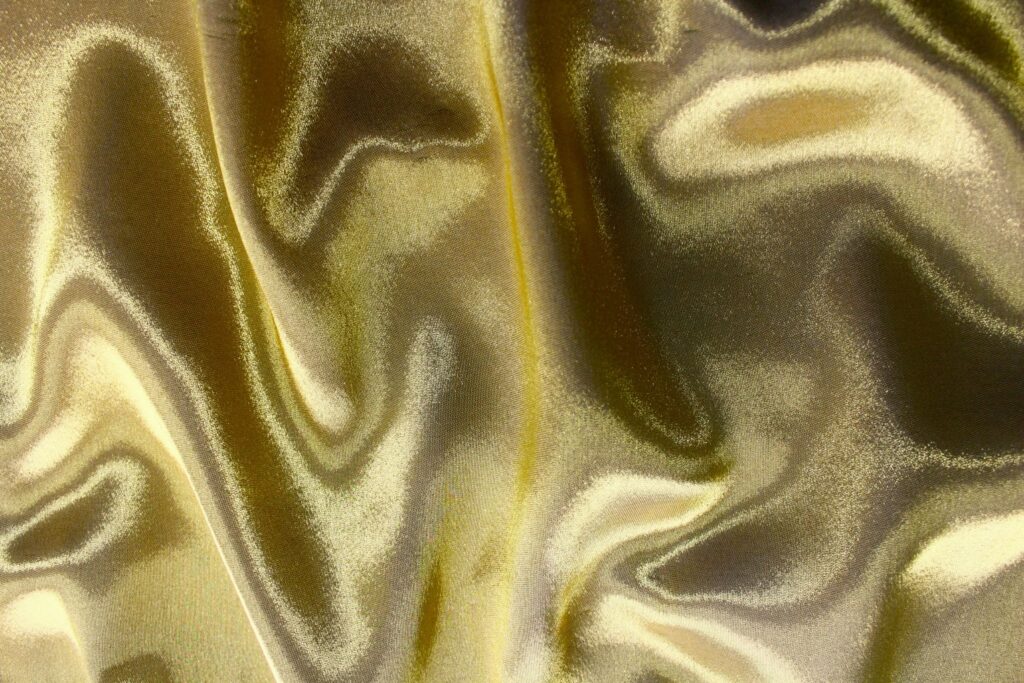
The Met Gala red carpet always leaves room for a touch of glitter and glamour. This year was no exception, with sequins, crystals, and lamé fabrics catching the light and adding a sense of drama and opulence. Attendees including Serena Williams, Grace Gummer, and Dree Hemingway embraced this direction, opting for high shine finishes that brought a sense of spectacle to the evening.
These looks leaned into texture and light reflection, where embellishment and metallic surfaces transformed garments into statement pieces. Whether through all over sequin coverage or the subtle sheen of woven metallic fibres, the effect was perfectly suited to the theatrical nature of the event.
For designers looking to incorporate this trend, we offer two metallic yarn options within our stock yarn range – a recycled Lurex and a Lumi yarn, both creating high shine, sparkle, and a refined, catwalk-ready finish.
Within our collection of ready to weave designs we have many options using these metallic look yarns including jacquards and plains fabric.
Sculptural Silhouettes: Fabric as Architecture
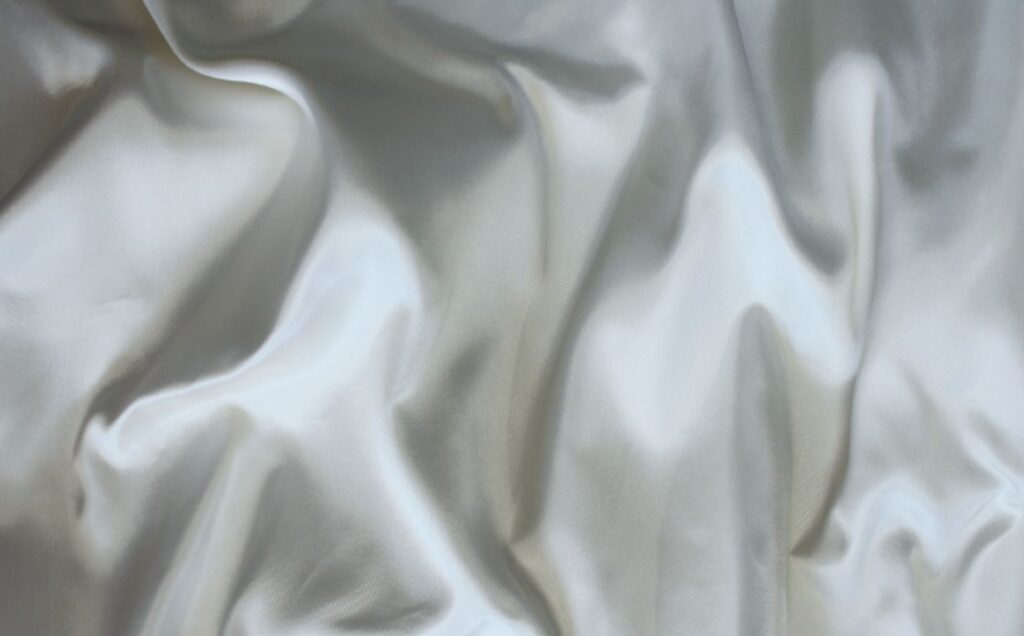
We noted many designers interpreting the theme through architectural form. Exaggerated volumes, engineered shapes, and sharply defined silhouettes. Seen on attendees such as Anok Yai, Blue Ivy, Stevie Nicks, and Katy Perry, these couture looks played with proportion and structure, creating striking and sculptural statements.
Such silhouettes rely on textiles that can actively support and hold shape. Silk taffeta remains a popular choice, crisp yet responsive, capable of maintaining sculptural volume while still allowing for controlled movement. Sweeping skirts, sculpted bodices, and exaggerated proportions all depended on fabrics with body.
Corsetry and Art History
Corsetry emerged as another key reference point at the Met Gala. Long embedded in art history, from renaissance portraiture through to romantic literature, it continues to evolve in contemporary dress. This year, bodices and corsets were reimagined in a variety of ways, with many designs exploring unconventional materials such as foil, metal-like finishes, and rigid sculptural components. These interpretations pushed corsetry into a more avant-garde space.
Traditionally, corsets are often constructed using rigid structures and tightly woven fabrics designed to provide support and durability. Satins remain a popular choice, providing a smooth surface that enhances contour while subtly reflecting light. Our plain satins, available in 100% silk and silk viscose compositions, are particularly well suited, balancing lustre with strength.
Alongside this, jacquards are also widely used for bodices, combining decorative surface design with the structure needed to hold shape.
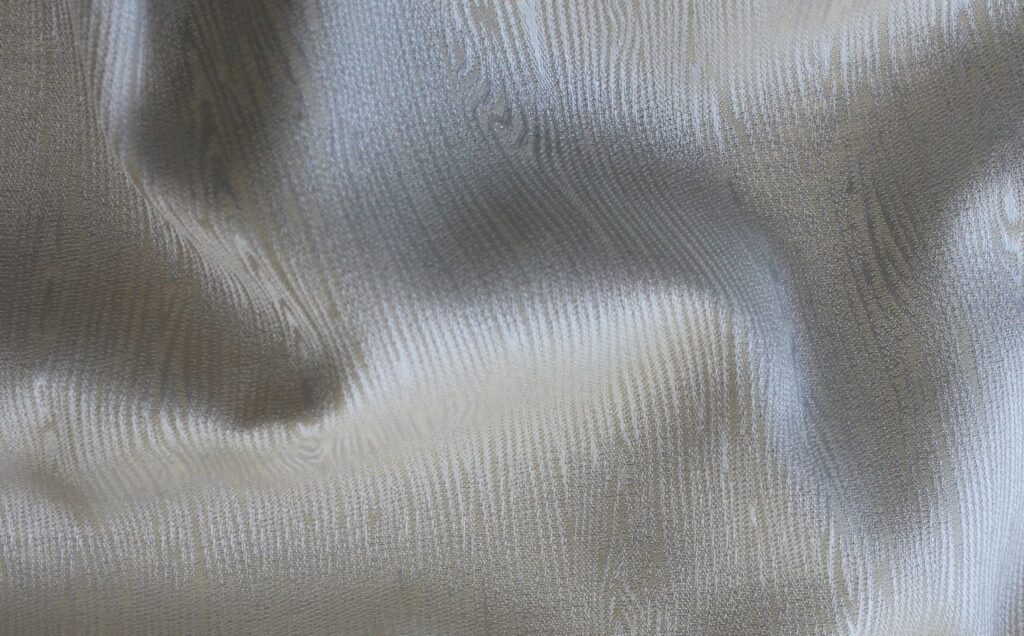
At this years event Rachel Zegler wore a lace up bodice dress. Made from a white moiré fabric.
As specialists in jacquard weaving, we offer a collection of jacquard moirés. A versitile alternative to the traditional finish, these woven designs create a similar visual effect, giving designers greater control over scale, colour, and pattern, while maintaining a contemporary feel.
Renaissance Drapery and the Feminine Form
Alongside structure, we observed softer, more fluid silhouettes on the Met Gala red carpet. Drawing on the elegance of Renaissance drapery and the enduring influence of classical Greek sculpture, these looks emphasised movement, form, and the natural flow of fabric around the body.
These silhouettes relied on textiles with fluidity, fabrics that fall cleanly, gather gracefully, and move with ease. Many designs embraced minimal surface decoration, allowing plain or subtly sheer fabrics to evoke the simplicity and purity associated with ancient sculpture.
We offer a considered range of lightweight silk and mixed-composition fabrics within our collections, developed to enhance drape and natural movement. Silk and viscose blends, in particular, provide the softness and fluidity needed to create these sculptural, body-skimming silhouettes, while maintaining a refined handle and elegant finish. Select qualities within the collection also incorporate subtle texture or jacquard elements, giving designers the option to introduce depth without compromising on the clean, understated aesthetic central to this trend.
Fabrics as Literal Works of Art
For some, “Fashion Is Art” was interpreted quite literally with garments becoming canvases that displayed imagery and references drawn directly from fine art. Attendees such as Emma Chamberlain, Chase Infiniti, Karan Johar and Devyn Garcia embraced this approach, showcasing pieces where clothing moved beyond silhouette into visual storytelling. Trompe l’oeil techniques also played a key role, creating optical illusions that mimicked painted surfaces and sculptural forms further blurring the line between fashion and artwork.
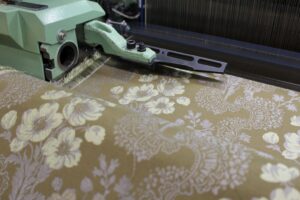
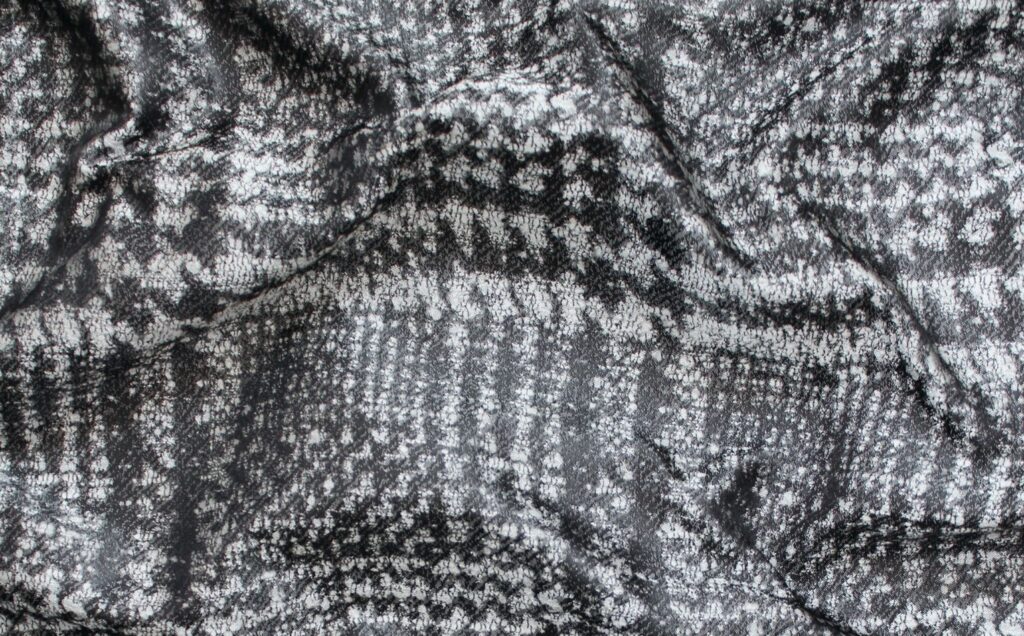
One example within our collection explores how weave structure itself can be used to create illusion. Using graded sateen weaves, this quality achieves a high-definition effect that mimics the appearance of a bouclé-textured check. Despite being a lightweight 100% silk fabric, the surface appears far more dimensional and tactile than expected, demonstrating how jacquard construction can transform perception. This technique allows for intricate control over light and shadow within the weave, and can also be applied to translate photographic imagery or hand-painted artworks into woven form, further reinforcing jacquard’s role as a medium for artistic expression.
Jacquard fabrics are particularly well suited to this direction. Woven rather than printed, they create depth and definition, allowing complex imagery to emerge through yarn and construction. This gives designs a richness that echoes traditional art forms, while maintaining the flexibility required for contemporary garment design.
Our archive of ready-to-weave jacquard designs spans a wide range of aesthetics, from classical references to more contemporary and abstract compositions. Alongside this, our bespoke development service enables designers to translate their own artwork directly into cloth, offering the opportunity to create something individual.
From sculptural tailoring to fluid drapery, and from intricate jacquards to high-shine metallics, this year’s Met Gala reinforced the role of fabric as the foundation of design. While the theme encouraged bold artistic expression, it also highlighted the importance of material choice in realising these ideas whether through structure, surface, or movement.
As a mill, our role is to support this process, offering both ready-to-weave designs and bespoke developments that allow ideas to evolve into finished fabrics. Whether through innovation in jacquard weaving, carefully developed blends, or stock-supported qualities, we continue to focus on creating textiles that meet the demands of both creativity and performance.
Contact us today to explore our full collection of fabrics and find inspiration for your next collection.